Terrier Breeds: A Beginner-Friendly Guide to Energetic, Loyal, and Playful Dogs


Terrier breeds are known for their bold personalities, energetic spirit, and deep loyalty to their families. Whether you live in a small apartment or a large home with a yard, there is a terrier that can easily fit your lifestyle. But choosing the right terrier is not always simple. Each terrier breed has its own temperament, grooming needs, size variations, and training challenges.
This beginner-friendly guide will help you understand the world of terrier breeds, including their history, behavior, care requirements, and how to choose the right one for your home.
1. What Are Terrier Breeds?
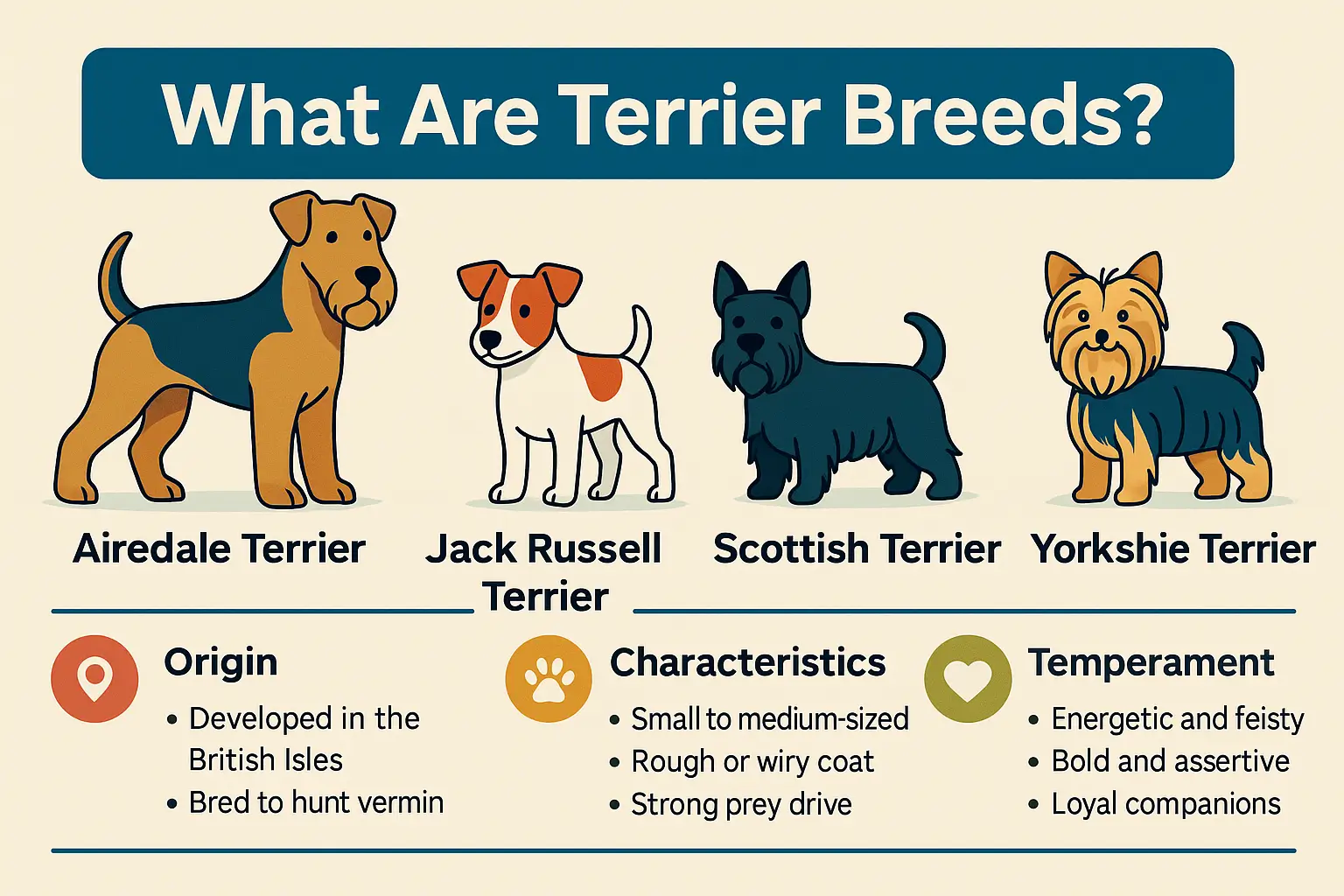
Terriers are a group of dog breeds originally bred to hunt small animals like mice, foxes, and rats. The word “terrier” comes from the Latin word terra, meaning earth, because terriers would dig into the ground to chase prey. Today, terrier dogs are popular family pets known for being:
- Playful
- Alert
- Fearless
- Affectionate
- Energetic
They are loyal companions and excellent watchdogs, often bonding closely with their owners.
2. Common Traits of Terrier Dogs
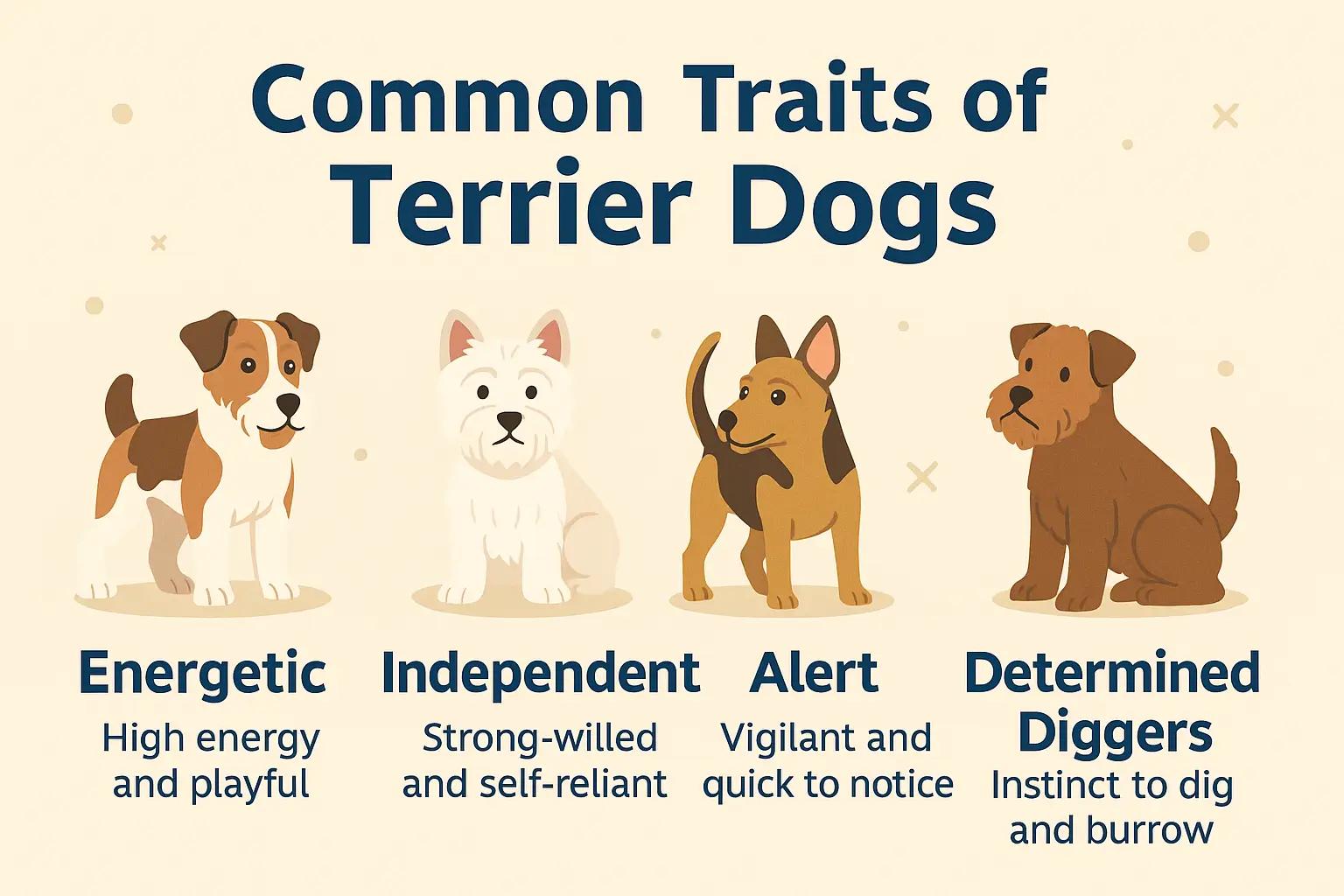
Even though terrier breeds vary in size and coat type, they share some common personality traits:
| Trait | Description |
|---|---|
| Energy Level | High – they need active play and exercise |
| Intelligence | Very smart but can be stubborn |
| Temperament | Confident, bold, sometimes bossy |
| Vocal Behavior | Likely to bark alertly |
| Socialization | Needs early training with people and animals |
3. A Brief History of Terrier Breeds
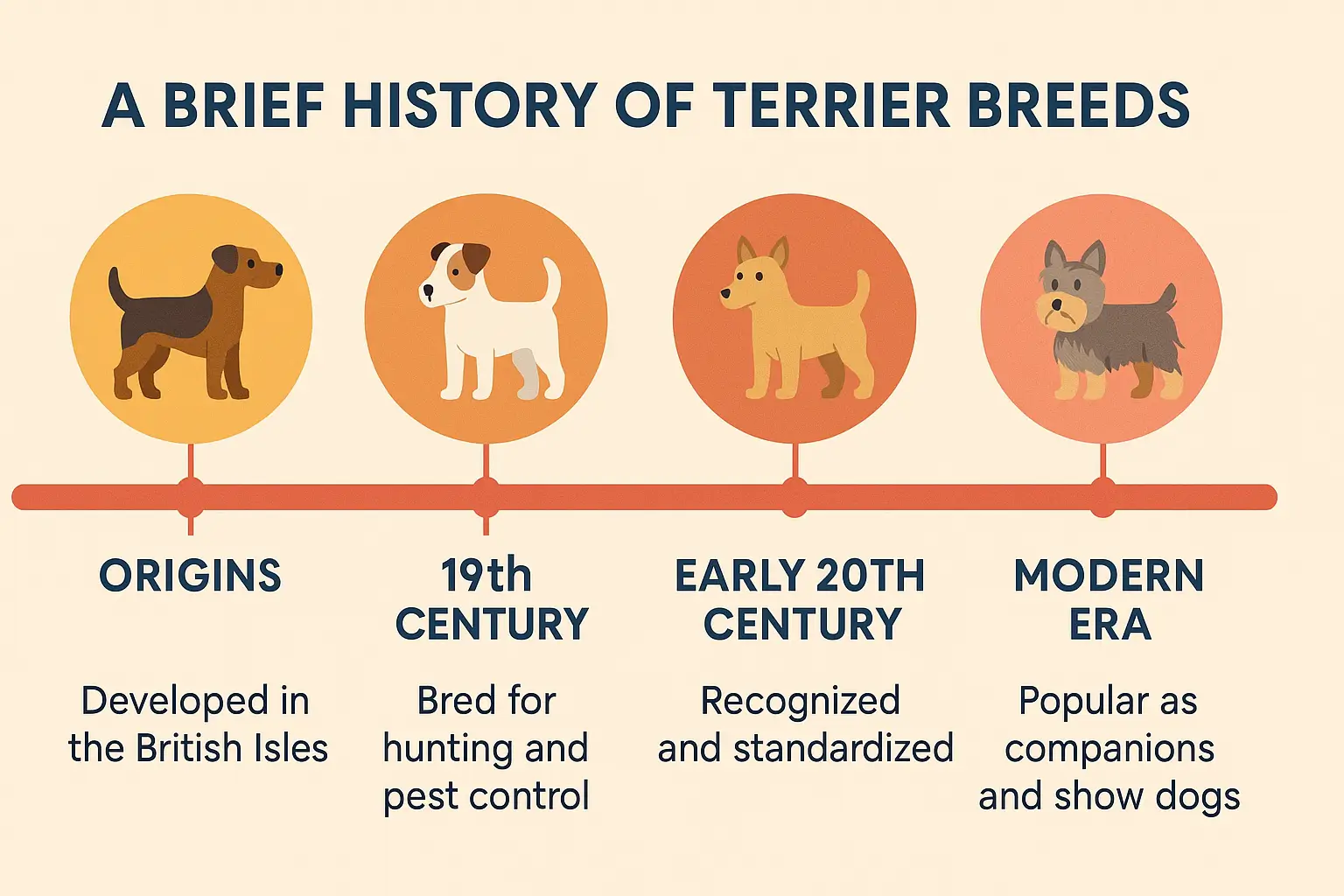
Terriers were first developed in England, Scotland, and Ireland. Farmers needed dogs that could protect barns from rodents and chase animals hiding underground. Their tasks required:
- Speed and agility
- Strong jaws
- Quick thinking
- Courage
So breeders began selecting dogs that were tough, gritty, loud, and brave.
Over time, terriers became loved as household pets while still keeping their adventurous spirit.
4. Types of Terrier Breeds
Terriers come in many shapes and sizes. Below is a simplified grouping to help beginners choose.
Small Terrier Breeds (Great for Apartments)
| Breed | Weight Range | Key Traits |
|---|---|---|
| Yorkshire Terrier | 4–7 lbs | Gentle, affectionate lap dog |
| Jack Russell Terrier | 13–17 lbs | Highly energetic, loves running |
| Cairn Terrier | 13–14 lbs | Curious, playful, spirited |
| West Highland White Terrier (Westie) | 15–20 lbs | Friendly, confident, bold |
Medium Terrier Breeds
| Breed | Weight Range | Key Traits |
|---|---|---|
| Border Terrier | 11–16 lbs | Good with families, mild temperament |
| Fox Terrier | 15–19 lbs | Intelligent, active, adventurous |
| Scottish Terrier (Scottie) | 18–22 lbs | Brave, dignified, loyal |
Large Terrier Breeds
| Breed | Weight Range | Key Traits |
|---|---|---|
| Airedale Terrier | 40–65 lbs | Known as “King of Terriers,” protective and smart |
| Irish Terrier | 25–27 lbs | Fearless, friendly, loves attention |
| Giant Schnauzer (Terrier-type) | 55–85 lbs | Highly trainable, powerful working dog |
5. Popular Terrier Breeds and Their Personalities
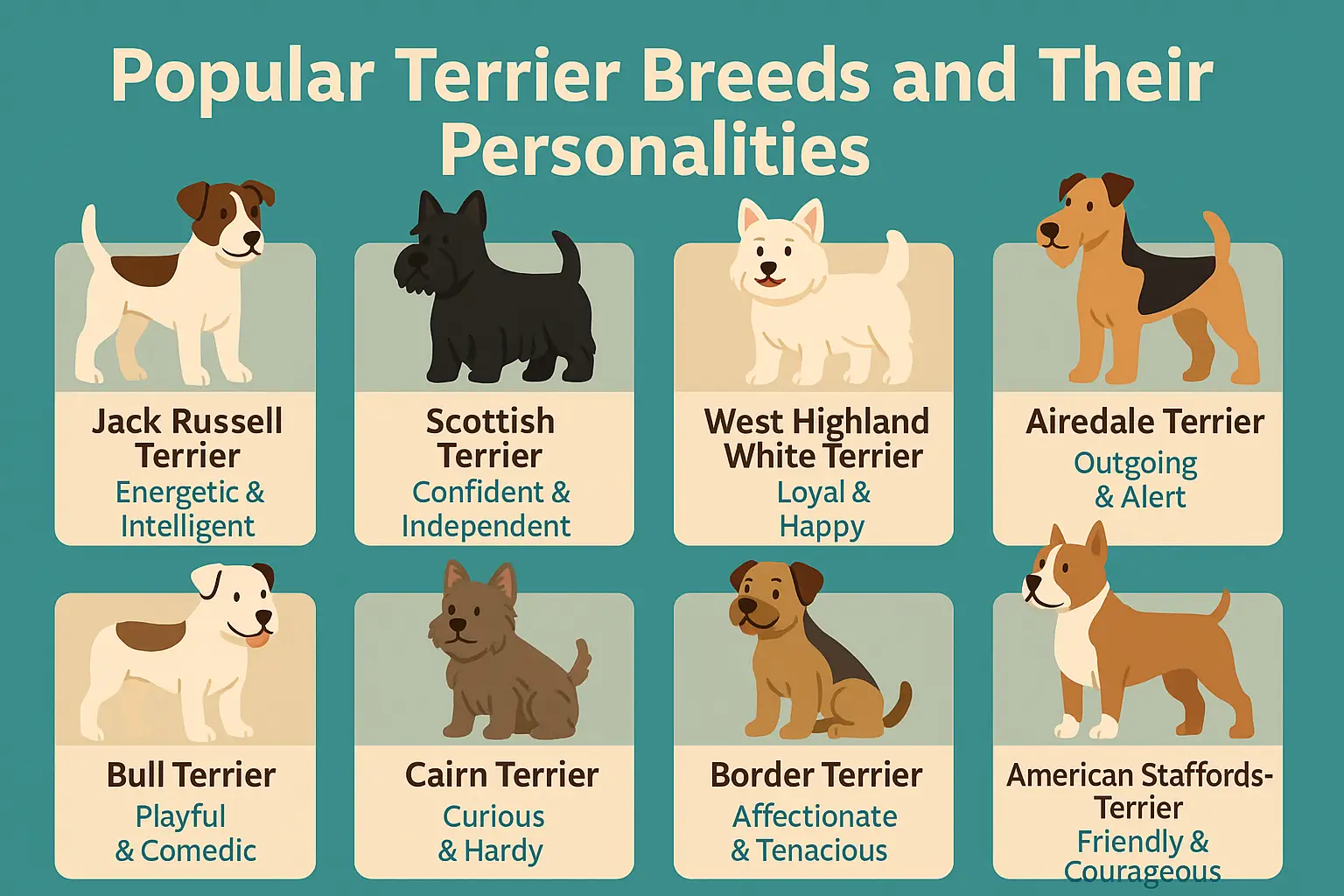
1. Yorkshire Terrier
- Gentle and loving
- Easy to keep in small homes
- Requires regular brushing due to long hair
2. Jack Russell Terrier
- Extremely active and energetic
- Needs daily exercise and mental stimulation
- Great for sporty owners
3. West Highland White Terrier
- Always cheerful and confident
- Rarely shy or fearful
- Good family companion
4. Border Terrier
- One of the calmest terrier breeds
- Adaptable and affectionate
- Easy to train for first-time owners
5. Airedale Terrier
- Intelligent and protective
- Loves outdoor activities
- Best for experienced dog owners
6. Grooming and Coat Care
Terrier coats vary: wiry, smooth, fluffy, or silky.
Most terriers do not shed excessively, making them suitable for allergy-sensitive households.
| Terrier Coat Type | Grooming Needs | Shedding Level |
|---|---|---|
| Wiry Coat (e.g., Westie, Cairn) | Hand stripping or trimming every 6–8 weeks | Low |
| Silky Coat (Yorkie) | Daily brushing to avoid tangles | Very low |
| Smooth Coat (Fox Terrier) | Weekly brushing | Moderate |
Tip: Use a slicker brush and a metal comb for best results.
7. Training Terriers: What You Must Know
Terriers are smart but independent, which means training can be rewarding but requires patience.
Training Tips
- Use positive rewards (treats, praise, play)
- Keep training sessions short (5–10 minutes)
- Avoid yelling or punishment
- Start socialization early
Terriers respond best when training is fun and engaging.
8. Best Terriers for Different Lifestyles
Best Terrier Breeds for Families
- Border Terrier
- West Highland White Terrier
- Cairn Terrier
Best Terriers for Apartment Owners
- Yorkshire Terrier
- Scottish Terrier
- Westie
Best Terriers for Active Owners
- Jack Russell Terrier
- Fox Terrier
- Airedale Terrier
Best Terriers for Seniors
- Yorkie
- Cairn Terrier
- Border Terrier
9. Health & Lifespan
Most terriers are long-lived, often reaching 13–17 years.
Common health conditions include:
- Skin allergies
- Patellar luxation (kneecap issues)
- Dental tartar buildup
Regular vet visits and a healthy diet are essential.
10. How to Choose the Right Terrier Breed
Ask yourself:
- How active is my lifestyle?
- Do I live in an apartment or house?
- Do I want low grooming or high grooming?
- Am I ready for a playful, sometimes bossy dog?
Then match your answers to the tables above.
11. Conclusion: Is a Terrier Right for You?
Terrier breeds are loyal, intelligent, and fun-loving dogs. They require attention, mental stimulation, and gentle but firm training. If you want a dog that is brave, affectionate, and full of personality, a terrier may be your perfect companion.
12. FAQs
Q1. Are terrier breeds good for first-time dog owners?
Yes. Some terriers like Border Terriers, Westies, and Yorkies are excellent for beginners.
Q2. Do terriers bark a lot?
Yes, many terriers are naturally vocal and alert. Early training can reduce excessive barking.
Q3. Are terriers hypoallergenic?
Some terriers have low-shedding coats that may be good for allergy-sensitive households.
Q4. How much exercise do terriers need?
Most terriers need 30 to 90 minutes of activity daily.
Q5. Do terriers get along with cats?
It depends on training. Early socialization is key.