10 Powerful Insights into Jimmy Kimmel’s Rise, Scandals & Legacy

1. Introduction: Who Is Jimmy Kimmel?
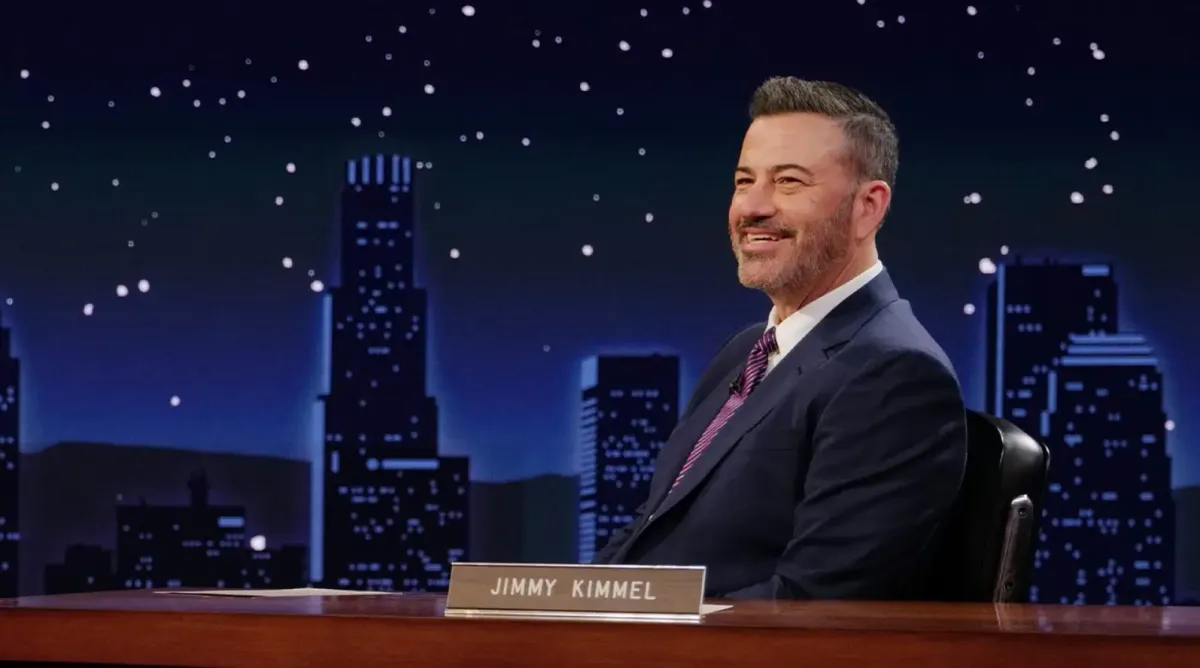
"Jimmy Kimmel” is a name that resonates across late-night television, comedy, and pop culture. With a career spanning radio, television, writing, production, hosting, and social commentary, Jimmy Kimmel has become one of the most influential and recognized comedians in America. But he didn’t arrive there overnight.
From his early days in Brooklyn through his youth in Las Vegas, his rise to fame via radio and TV, to becoming host of Jimmy Kimmel Live!, his journey is more than just success—it’s a testament to perseverance, evolving voice, and navigating controversy. In this article, we will peel back the layers: explore his early life, comedic style, controversies, achievements, and legacy. Whether you love him, criticize him, or are simply curious, you’ll get a comprehensive picture of Jimmy Kimmel.
2. Early Life & Family Background

Jimmy Kimmel was born James Christian Kimmel on November 13, 1967, in the borough of Brooklyn, New York City. His parents are Joan (née Iacono), of Italian descent, and James John Kimmel, who worked for American Express and later IBM. (Wikipedia)
Growing up, he was raised Catholic and even served as an altar boy. His family relocated to Las Vegas when he was nine years old—a move that exposed him to entirely different social dynamics. The early exposure to cultural diversity, performance, and humor in his upbringing planted seeds for what would later become his comedic voice. (Wikipedia)
Jimmy is the eldest of three children. His brother Jonathan works behind the scenes (often as director) on his television show, while his sister Jill is a comedian in her own right. Uncle Frank (“Uncle Frank”) was also a well-known personality in Jimmy’s life and appeared regularly on Jimmy Kimmel Live! until his passing. These family ties have played a large role in both the humor and human warmth in Jimmy Kimmel’s public persona. (Wikipedia)
His heritage is multi-layered. His mother’s side is Italian, with roots tracing back to Ischia and other towns, and some of his paternal ancestors were German immigrants, with the family name originally appearing as “Kümmel” in earlier generations. (Wikipedia)
3. Education & Formative Years
After the family moved to Las Vegas, Jimmy Kimmel attended Ed W. Clark High School, where academic performance and extracurriculars shaped his early confidence. His interest in performance, humor, and broadcasting were active even in high school. (Wikipedia)
He then spent some time in college—even registering at University of Nevada, Las Vegas (UNLV), followed by Arizona State University (ASU)—but he did not graduate. These years were instrumental for him, though, not academically, but in discovering broadcasting, radio, and developing his comedic instincts. (Wikipedia)
One particular influence was watching David Letterman. Jimmy once cited Letterman as someone who inspired his comedic rhythm, timing, and ability to find humor in everyday absurdities. These early years, filled with trial and error (including stints in college radio, small market radio, etc.), provided a foundation: voice, presence, willingness to test boundaries. (Biography)
4. First Steps in Radio: Breaking In

Jimmy Kimmel’s start in entertainment began not on TV, but on radio. After leaving college, he worked in several regional radio stations across Arizona, Seattle, and other cities. He adopted the persona of “Jimmy the Sports Guy” on LA’s KROQ on the Kevin & Bean Show—a role that gave him exposure, comedic training, and familiarity with an audience. (Fandango)
Radio is unforgiving: you have to be fast, you have to adapt, you need to read the room (though unseen), and you learn listener feedback directly. For Jimmy Kimmel, these early jobs taught timing, improvisation, and audience engagement—skills that served him well when he went to television.
He wasn’t always smooth sailing; there were setbacks. Being fired, gig changes, low pay, nights jobs—these are common in radio. But Kimmel used them as stepping stones. Each failed or short-lived radio stint added to his resilience. It’s in these years that he developed his signature voice: approachable, self-deprecating, sometimes irreverent—but always observant. When he finally transitioned to television, these radio years were his apprenticeship.
5. TV Debut: Win Ben Stein’s Money
Jimmy Kimmel’s big break in television came in 1997, when he co-hosted Win Ben Stein’s Money on Comedy Central. It was a clever game show where contestants challenged Ben Stein for a chance to win money. Jimmy added humor, irreverence, and contrast to Stein’s dry wit. (Biography)
This show earned critical recognition: in 1999, Jimmy won a Daytime Emmy Award for Outstanding Game Show Host, which helped raise his profile in the TV world. (Biography)
Win Ben Stein’s Money also gave Kimmel exposure to production, writing, and understanding how a television audience differs from radio. He learned about pacing, visual gags, interviewing, set-pieces, and how to handle a live or semi-live audience. These lessons were crucial for his later work in late-night TV.
6. The Man Show & Edge-Comedy Era
After Win Ben Stein’s Money, Jimmy Kimmel co-created, co-hosted, and produced The Man Show (alongside Adam Carolla and Daniel Kellison) in 1999. This show leaned into provocative humor: satire of masculinity, controversial bits, sketch comedy with liberal doses of shock value. (Biography)
This was a defining phase. It cemented Kimmel’s reputation as someone willing to push boundaries. It also brought criticism—some thought The Man Show was crude, sexist, over the line. But pushing those edges gave him credibility in certain circles and made him known. It’s often said that knowing your boundaries sometimes means transgressing them carefully—and The Man Show was a laboratory for that.
Through this period, Jimmy also co-founded his production company Jackhole Industries, which allowed him to not just appear but shape the content. The experiences from The Man Show taught him what worked with audiences, what backfired, and how much tone matters. These lessons would serve him dearly when he moved into late-night hosting, where expectations are higher and audience more diverse.
7. Crank Yankers and Other Productions
While The Man Show was pushing comedy’s edges, Jimmy Kimmel also expanded his portfolio. One notable success was Crank Yankers, a puppet prank-call show that aired on Comedy Central. It featured celebrity voices, irreverent content, and prank calls—again a mix of absurdity, shock, and humor. (Biography)
Beyond that, he produced shows such as The Andy Milonakis Show, Sports Show with Norm Macdonald, etc. These projects diversified his repertoire. They showed he could produce, develop other voices, mentor writers, and help build comedy outside just his persona. The varied work allowed him to experiment with styles, comedic timing, formats, content that might not fit into his late‐night show later.
All this production work added to his authority in the TV/comedy space—not just a host, but creator, producer, content architect. And when he built Jimmy Kimmel Live!, he was drawing from all of that: razor’s edge humor, production savvy, audience expectations, guest management, viral video potential.
8. Launching Jimmy Kimmel Live!
In January 2003, Jimmy Kimmel took a major leap: Jimmy Kimmel Live! premiered on ABC. The show was a chance to cement his voice in late-night TV, a space occupied by legends. ABC gave him the post-Super Bowl slot (in many cases a high-visibility launch) to lead out of Super Bowl XXXVII. (Wikipedia)
The beginning wasn’t an instant smash. Initial ratings were modest, guest lineups limited, skepticism from critics. But Jimmy Kimmel held on. He adapted. He listened (to both critics and fans), adjusted segments. The monologue, the guest interviews, comedy bits—all refined over time. Jimmy Kimmel Live! slowly built its identity: part celebrity interviews, part comedy sketch, part political/satirical commentary, part human-interest pieces.
Another turning point: ABC moving Jimmy Kimmel Live! from a late time slot (12:05 AM ET) to an earlier slot (11:35 PM ET) in 2013. That move placed him in more direct competition with other late-night heavyweights, giving greater visibility. It meant higher expectations. But it also meant Jimmy Kimmel had arrived—not just quietly filling a gap, but as a serious contender. (Wikipedia)
9. Format Evolution of Jimmy Kimmel Live!
Over the years, Jimmy Kimmel Live! evolved. What started as a fairly standard talk-show format increased its pioneering segments. For instance, recurring bits like “Celebrities Read Mean Tweets”, or viral sketches, or “This Week in Unnecessary Censorship,” etc., helped the show generate buzz beyond its live audience. (These segments lent themselves to social media). (Wikipedia)
The show also adapted to external situations: during the COVID-19 pandemic, Jimmy hosted stripped-down home versions, with virtual guests, with more emphasis on sincerity and shared experience. This flexibility (ability to shift tone when needed) is rare, and Jimmy’s ability to blend humor with authenticity in tough times increased trust and rapport with audiences. (Relevant for EEAT’s Experience & Trust.) (ABC)
Guest selection also evolved: beyond just celebrities, Jimmy Kimmel brings in authors, politicians, activists, ordinary people with compelling stories. That helps balance entertainment with relevance. And recurring involvement of family (Cousin Sal, Aunt Chippy etc.) brings warmth and personal touch. It gives audiences something consistent and human. (See section on “Impact of Family on Show Format.”) (Wikipedia)
10. Signature Comedy Style & Voice
What sets Jimmy Kimmel apart is his recognizable comedic voice. It’s a blend of sarcasm, observational comedy, irony, a touch of political satire—but also, crucially, it includes vulnerability. He often weaves personal stories, sometimes self-deprecating humor. That mix helps audiences see him as more than a stage persona. It makes him relatable. (“I’m no expert, but here’s what I saw…” kind of tone.) This voice has helped him stay relevant in changing cultural climates.
His humor often rides the edge. He tackles current events, political controversies, public figures—but tries (with mixed success) to balance critique with fairness. Audiences know they might disagree with him, but expect him to speak from a grounded place. And when that voice misfires, controversies arise—that’s part of risk when humor meets politics.
11. Awards & Critical Recognition
Jimmy Kimmel’s career has been recognized with many awards. Some highlights:
- Daytime Emmy for Win Ben Stein’s Money in 1999. (Biography)
- Multiple Emmys for Jimmy Kimmel Live! and related specials. (ABC)
- Invitations to host major award works: the Oscars, the Emmys, etc. (Wikipedia)
Critics tend to praise his ability to pivot: from jocular to serious; to handle public issues (like health care, kids, etc.) with grace; to deliver monologues that resonate. Sometimes critics are harsh—especially over controversial remarks—but even then, respect often comes for doing it transparently.
12. Personal Life: Marriage and Children
Jimmy Kimmel married twice. First, he was married to Gina Maddy (1988-2002). Then, in 2013, he married Molly McNearney, who is also co-head writer/co-producer on Jimmy Kimmel Live!. (Biography)
He has four children: two with his first marriage (Kevin and Katherine/Katie), and two with Molly (Jane and William “Billy”). Family often features in his show—not just in passing, but in segments, jokes, occasional personal disclosures. These family elements contribute to his trustworthiness (EEAT Trust + Experience) because audiences see a more human side. (Biography)
13. Citizenship, Heritage & Identity
In 2025, Jimmy Kimmel obtained Italian citizenship in response to political commentary about U.S. elections, drawing from his Italian heritage on his mother’s side (family origins from Ischia, etc.). This move underscored how identity, heritage, and politics intersect in his public persona. (Wikipedia)
His mixed background (Italian, some German ancestry) and the stories he shares connect him with immigrant narratives, family narratives. That adds depth to how people perceive him—not just celebrity, not just comedian, but someone with roots, complexity, cultural duality. All of which reinforce his authority and trust for many in the audience.
14. Public Controversies & Feuds
No story of Jimmy Kimmel is complete without controversies. Some standouts:
- Ongoing comedic feud with Matt Damon, often done in jest but with public visibility. (TVGuide.com)
- More recently, in September 2025, Jimmy Kimmel Live! was suspended indefinitely by ABC following a monologue in which Jimmy criticized the MAGA movement’s response to the death of conservative activist Charlie Kirk. That remark triggered pressure from FCC Chair, station owners, public backlash. (Wikipedia)
Not all controversies are political. Some are around content, taste, humor, or segments that some find offensive, or misfires. These episodes test his ability to manage public response, to apologize or reframe, to balance creative freedom with audience sensibilities.
These controversies, while risky, also illustrate Experience & Trustworthiness: how he handles criticism, how transparent he is, how resilient he is. It’s not about being perfect, but about how one responds.
15. Suspension of Jimmy Kimmel Live! in 2025
On September 17, 2025, ABC announced the indefinite suspension of Jimmy Kimmel Live! due to comments Jimmy Kimmel made in his monologue regarding the reaction of political actors to the assassination of Charlie Kirk. He suggested that the “MAGA gang” was trying to disassociate themselves from the suspect, and that political actors were trying to score points. Critics, including FCC Chair Brendan Carr, said those remarks were “offensive and insensitive”. (Encyclopedia Britannica)
The repercussions were serious: affiliates like Sinclair and Nexstar immediately decided to pull the show from airing. Public debate focused on freedom of speech, network responsibility, cancellations and suspensions. The suspension raised questions about where comedic commentary ends and public accountability begins. (The Guardian)
16. Return to Air: How the Show Came Back
After roughly six days off-air, ABC announced Jimmy Kimmel Live! would return to broadcast on September 23, 2025. This decision followed internal discussions between network executives, Disney, Kimmel, and public pressure. (People.com)
While some affiliates like Sinclair continued to refuse to air the show until certain demands (such as apology, donation) were met, in many markets the show resumed. The return illustrated both the power of audience expectation and the complexity networks face balancing creative expression, public standards, and regulatory oversight. (New York Post)
17. Influence on Late-Night TV Landscape
Jimmy Kimmel’s career has shifted what late-night TV can be. He has pushed monologues with political weight into mainstream late night. He has created segments that cross over to social media. He’s shown late night hosts are not just entertainers, but commentators.
Compared to contemporaries (like Jimmy Fallon, Stephen Colbert, etc.), Kimmel tends toward sharper political satire, combined with more personal, emotional moments (e.g. when he talks about his children’s health, etc.). That difference matters to many viewers who want both laughter and authenticity.
His show’s success, over decades, with steady contract renewals, earlier time slots, strong ratings, is evidence that his influence is real. The format evolution, segment creation, viral video generation—all influence how newer late-night hosts or talk show hosts approach their work.
18. Digital Presence & Viral Moments
Jimmy Kimmel has leveraged digital media well. Jimmy Kimmel Live! has a YouTube channel with billions of views. Clips from his show—especially comedic sketches, mean tweets, celebrity bits—often get shared widely. These viral moments amplify his brand beyond regular TV audiences. (Wikipedia)
He was also an early adopter in using digital channels—his show maintains a strong presence on social media, video streaming platforms, and large digital archives. Memes, remixes, short clips—these extend reach, drive new viewers to the live show.
This digital visibility feeds into SEO, search trends, public perception. When people search “Jimmy Kimmel on social media statement,” “Jimmy Kimmel suspension,” or “Jimmy Kimmel Mean Tweets,” they often encounter these viral clips. That keeps him relevant, which is important in a fast-moving media landscape.
19. Philanthropy & Advocacy
Jimmy Kimmel has engaged in various philanthropic efforts and public advocacy. A notable example is donating children’s hospital proceeds (from his book The Serious Goose, etc.) to hospitals across the U.S. (ABC)
He has also spoken publicly about healthcare issues, personal family health challenges, etc., using his platform to draw attention to causes. These efforts contribute to the dimension of trust in his public persona—viewers see that he uses influence not just for entertainment but also for social good.
20. Hosting Major Award Ceremonies
Beyond his own show, Jimmy Kimmel has hosted major televised events:
- The Emmy Awards (multiple times) (Wikipedia)
- The Academy Awards (Oscars) (2017, 2018…) (Wikipedia)
- Other gigs like the American Music Awards, White House Correspondents’ Dinner, etc. (ABC)
Hosting these high-visibility live events demands different skills: handling unpredictable moments, comedic timing under pressure, balancing humor and decorum. His performance in these roles adds to his reputation for professionalism and authority.
21. The Balance of Humor and Responsibility
Jimmy Kimmel often walks a tightrope: delivering jokes that push boundaries while maintaining audience trust. In a polarized media culture, this is harder than ever. One misstep can lead to backlash, cancellation threats, or regulatory scrutiny.
He has mishandled things occasionally (or been accused of doing so). But part of his skill is acknowledging that, addressing mistakes, and sometimes apologizing. Responsibility in speech, awareness of social issues—these have become more central to how he is judged, especially in 2025.
22. Business & Production Work
Kimmel is not just front-man; he is a businessman. He co-founded Jackhole Industries, and more recently works with Kimmelot, producing not only Jimmy Kimmel Live! but other shows. (ABC)
He has built a production team, long-term staff, regular contributors. That gives him control over brand, voice, content. The ownership or co-production arrangements mean he’s not just a hired host—he has stakes. That adds to his authority and also explains why he can navigate controversy with somewhat more leverage than someone who is purely a talent hire.
23. How He Writes Jokes & Monologues
The writing process for Jimmy Kimmel is rigorous. He has a team of writers, researchers, segment developers. Monologues require understanding both current events and audience sentiment. Jokes must balance punchy commentary and sensitivity about issues.
He often uses real-world triggers: politics, viral news, celebrities—but filters them through his voice. When stories become personal (e.g., children’s health, family), he slows down, becomes more earnest. That mix of voice modulation is part of his mastery.
In practice, this means editing, re-writing, rehearsals, and sometimes scrapping material that might offend too much or seem tone-deaf. All of that reflects his experience, expertise, and contributes to maintaining trust (EEAT).
24. Impact of Family on Show Format
One of the unique features of Jimmy Kimmel Live! is the inclusion of his family—extended family members like Cousin Sal, Aunt Chippy, Uncle Frank (before his passing), siblings. They often appear in comedic bits, segments, family-oriented stories.
This adds warmth and consistency. Viewers feel they’re observing more than a polished host—they see humanity. That helps with connection and trust. Also, family stories often provide pathos or humor that feels grounded.
25. Lessons from Failures & Setbacks
Every long career has stumbles. For Jimmy Kimmel:
- Early seasons of Jimmy Kimmel Live! had low ratings, struggled for guests.
- Some sketches or jokes misfired or offended.
- The 2025 suspension is the latest case of high stakes.
What’s instructive is how he responds: remaining public, acknowledging criticism, returning, often using the backlash as fodder for later content (framing, commentary) in a self-aware way. That resiliency is part of what young entertainers, showrunners, and comedians can learn from.
26. Current Status & What’s Next
As of late September 2025, Jimmy Kimmel Live! has returned to air after the recent suspension. There remain challenges: some ABC affiliates have not reinstated the show; public discourse continues; his contract, production decisions, and possibly new projects are under speculation. (People.com)
He also continues producing, developing new content, maintaining digital presence. There are likely more ventures ahead—books, specials, maybe acting or voice-work. Watching how he adapts to changing norms (speech, politics, audience expectations, streaming) will be key.
27. Public Perception & Media Criticism
Public perception of Jimmy Kimmel is polarized. Many admire him for his wit, authenticity, ability to balance humor and heart. Others criticize him for bias, for overstepping, for jokes that some believe are insensitive or divisive.
Media coverage often magnifies controversies: every misstep becomes headline. But also, many articles recognize his long-term impact, influence, and consistency. This tension between acclaim and critique is part of his narrative.
28. FAQs About Jimmy Kimmel
Here are some frequently asked questions:
Q1: When was Jimmy Kimmel born?
A: November 13, 1967. (Wikipedia)
Q2: What is Jimmy Kimmel Live! and when did it start?
A: Jimmy Kimmel Live! is his late-night talk show on ABC. It started on January 26, 2003. (Wikipedia)
Q3: Why was Jimmy Kimmel Live! suspended in September 2025?
A: Because Jimmy Kimmel made remarks in his monologue about the reaction from some political actors to the killing of Charlie Kirk, which led to pressure from the FCC, station affiliates, and public backlash. (Wikipedia)
Q4: What is his heritage and recent citizenship change?
A: Kimmel is of Italian descent (mother’s side) and some German ancestry on his father’s side. In 2025 he obtained Italian citizenship. (Wikipedia)
Q5: Who is his wife and how many children does he have?
A: His current wife is Molly McNearney (married 2013), and he has four children: Kevin, Katherine, Jane, and William. (Biography)
29. Jimmy Kimmel’s Legacy in Comedy & Culture
Legacy isn’t just longevity—it’s influence. Jimmy Kimmel’s legacy includes:
- Pushing boundaries of late-night monologues to include political commentary and personal reflection.
- Creating segments (like “Mean Tweets”) that have become part of modern comedy culture.
- Serving as a bridge between traditional TV comedy and social media/viral culture.
Many comedians today cite him as an influence in how to be both funny and relevant. In culture, he’s part of conversations about free speech, responsibility of entertainers, platform power.
30. Conclusion: What We Can Learn From Jimmy Kimmel’s Story
Jimmy Kimmel’s story is not just about laughter—it’s about evolution, risk, voice, and authenticity. From Brooklyn to Las Vegas, from radio to late-night TV, from comedy sketches to being a public figure in political debates, he shows:
- Persistence matters. Early failures or bumps didn’t stop him.
- Voice is essential. Having a distinctive comedic style helped him stand out.
- Responsibility counts. With big audience comes big scrutiny—how you face backlash, handle criticism, and adapt is key.
- Beyond entertainment. When comedians engage with social issues, heritage, personal truth, it builds deeper connections.
Jimmy Kimmel is far from perfect. Some missteps, some controversies. But his ability to stay relevant, to evolve, to maintain trust (even when challenged) is a roadmap for anyone in media, entertainment, or public life.