24 Jaw-Dropping Facts About George Santos That Will Blow Your Mind

1. Introduction: Why George Santos matters
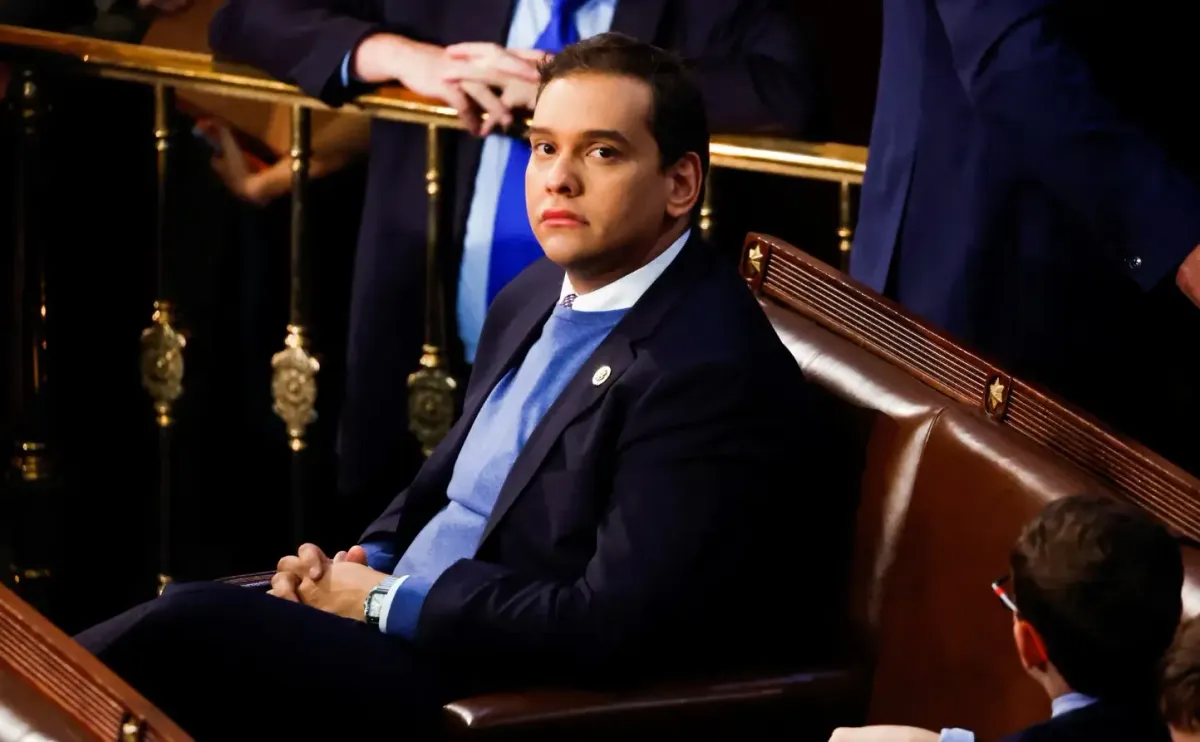
If you’ve been following U.S. political drama, chances are you’ve heard of George Santos. His meteoric rise to the U.S. House of Representatives—and equally dramatic fall—make him a case study in ambition, image-construction, and the consequences of deception. From an under-the-radar businessman to a celebrated freshman congressman to an expelled member facing criminal charges, his journey reads like a thriller.
In this article, we examine George Santos with depth, nuance and detail. We’ll peel back the layers of his story—his claimed past, his real past, his time in office, and his legal reckoning—with an eye toward what lessons we can draw about politics, truth and public trust.
Throughout, we’ll be referring repeatedly to George Santos, the exact keyword at hand, so you’ll see it naturally in headings, in context, and dotted throughout the text. Let’s dive in.
2. Early life and roots of George Santos
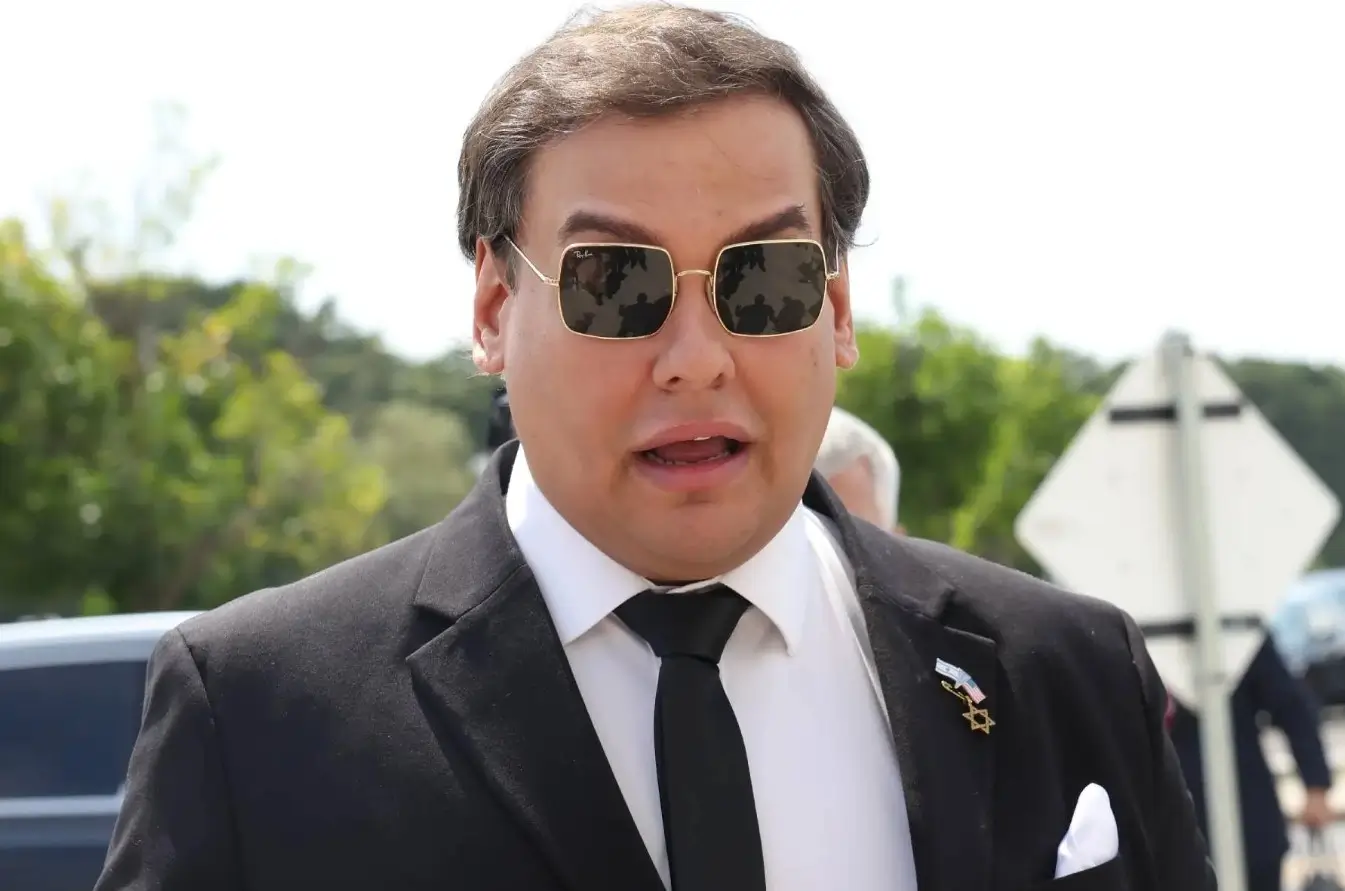
Born on July 22, 1988, George Anthony Devolder Santos (commonly just George Santos) came into the world in Sunnyside, Queens, New York. (IMDb)
He was raised in a household that described itself as modest. According to sources, his mother, Fátima Alzira Caruso Horta Devolder, and father, Gercino Antônio dos Santos Jr., were immigrants from Brazil. (The Independent)
What’s interesting: from his earliest statements through campaign materials, Santos painted a picture of a self-made man rising from immigrant roots. But as later investigations revealed, many of the foundational claims required serious scrutiny.
Growing up in Queens, an ethnically diverse borough of New York, he was exposed to multiple languages, cultures, and the grit of city life. Some local accounts suggest he told peers in junior high school that he was still improving his English— which indicates a period of real challenge. (The Independent)
That early environment likely shaped his comfort with reinvention—an ability to adopt a new persona when it suited his goals. More on that soon.
3. Family background and immigrant story
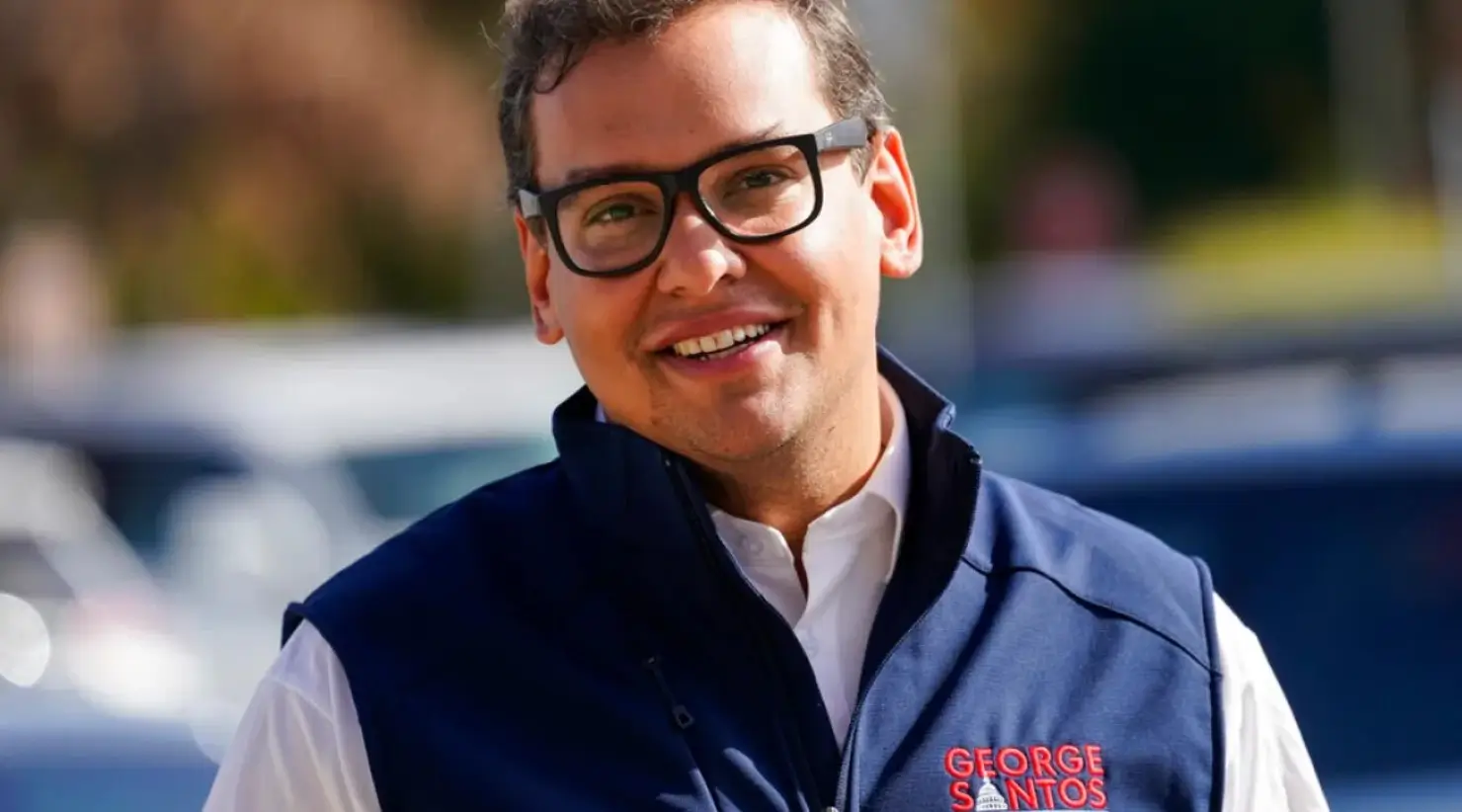
According to his campaign and early bios, George Santos claimed his grandparents were European Jews who fled the Holocaust, and that he had dual U.S.-Brazil citizenship. (Wikipedia)
Yet records show a different picture: maternal grandparents born in Brazil; no evident connection to Ukraine or the Holocaust as claimed. (Wikipedia)
His mother is reported to have moved to Florida in 1985 and then New York, working in agriculture before domestic work; his father worked as a house painter in Queens. (Wikipedia)
In other words: the immigrant narrative is real in part, but the embellishments around it are significant. For George Santos, the family-roots story was both an asset and, eventually, a risk: it helped create a rags-to-riches arc that voters could relate to, but once the details were questioned, the credibility started to erode.
One anecdote: He claimed to have been born at 24 weeks in gestation. But it couldn’t be independently verified. (Wikipedia)
In storytelling terms: imagine a young man from Queens, whose parents worked hard, who looked at a camera and painted himself as both underdog and self-made success. That narrative holds tremendous emotional appeal—but when the facts don’t align, the unraveling tends to be messy.
4. Education claims versus reality
One of the earliest and most visible cracks in the public persona of George Santos came from his education claims. During his campaign, he asserted he had attended the prestigious private high school Horace Mann in New York City, and had later earned degrees (or at least claimed association) with institutions such as Baruch College and New York University. (ABC7 New York)
But reporters found no record of him at Horace Mann, nor evidence of his attendance at the colleges he claimed. (Wikipedia)
For example: He claimed he worked for Goldman Sachs and Citigroup—but both firms said they had no record of him being employees. (ABC7 New York)
In short: The education story was used as a credibility anchor—by implying elite schooling and prominent business ties he hoped to bolster his resume. But when challenged, the claims fell apart, and that undermined his trustworthiness.
This is critical when we talk about experience, expertise, authority, trustworthiness—the very building blocks of public responsibility. When a candidate’s back-story is shown to be inflated or false, the “trustworthiness” component collapses. That is central to what happened with George Santos.
5. Early work and business assertions
Before running for Congress, George Santos claimed he ran a firm called the Devolder Organization and worked in capital introductions, real-estate deals, bio-tech, M&A and the like. (George for NY)
On his campaign website, he described himself as an “experienced businessman, financier and investor”. (George for NY)
Yet investigators pointed out that publicly available information about Devolder Organization is minimal, news outlets found no credible link between Santos and the major firms he claimed, and his income disclosures changed dramatically in a short time. (ABC7 New York)
One striking figure: In 2020, his personal financial disclosure listed a salary around $55,000; in 2022, he claimed assets between $2.6 million and $11.25 million, including an apartment in Rio de Janeiro. (ABC7 New York)
All of this suggests a discrepancy between what was claimed and what could be verified. From the lens of authority and experience: the claims were made to convey “I know big-business, I have serious deals, I can lead” — but when they were revealed as doubtful, they cost him credibility.
For readers, the takeaway: It matters not only what you say you did—but whether there is evidence to back it up. George Santos’s business narrative danced on that thin line, and eventually the evidence tipped.
6. The political ambition emerges
Ambition is a driver in public life, and in the case of George Santos, it emerged early. After his initial loss in 2020 for New York’s 3rd Congressional District seat, Santos did not fade into the background—he pivoted, raised money, stayed visible, and aligned himself with national figures. (Wikipedia)
According to credible sources, he spent time at Mar-a-Lago, raised funds via grassroots and major donors, and positioned himself as the next Republican rising star in Queens/Long Island. (Wikipedia)
He also made history: in his 2022 win he became the first openly LGBTQ Republican freshman elected to Congress. (Wikipedia)
So the ambition was clear: Build a profile, secure the nomination, win the seat, and move up fast. The sense of “this could be my moment” must have been strong for Santos—and the energy for reinvention appealing.
Yet ambition must be matched by integrity. And when the matches don’t hold, the fall can be steep.
7. 2020 campaign: first attempt at Congress
In 2020, George Santos ran for the U.S. House in New York’s 3rd District but was defeated by incumbent Democrat Tom Suozzi. (Wikipedia)
This first attempt was essential for several reasons: (1) it gave Santos a taste of the electoral process and the machinery required; (2) it allowed him to build networks, donors, name-recognition; (3) it set the stage for his 2022 comeback, in which he refined his story, ramped up fundraising, and enhanced his profile.
Often in politics, losing that first time is seen as a learning ground. However, with Santos the lessons he drew appear to have included “how to package the resume” and “how to sell the dream”—but less of “how to ensure the facts match the dream”. Which becomes pivotal later.
8. 2022 campaign: breakthrough victory
In the 2022 election cycle, George Santos ran again for the 3rd Congressional District seat and this time succeeded, defeating Democrat Robert Zimmerman. (Wikipedia)
His win flipped a seat formerly held by the Democrats, making national headlines. For the GOP, having an openly LGBTQ Republican win in that district was something of a surprise and added to the story of the November 2022 mid-terms.
From campaign appearances to fundraising blitzes, Santos embraced the spotlight and positioned himself as the next “new voice” in Washington. The promise of change, combined with his evocative background story, gave him momentum.
Yet the very victory that elevated him also increased the scrutiny he would face—and as we’ll see, that scrutiny would prove unforgiving.
9. Key claims Santos made during the campaign
During and after his campaign, George Santos made a number of striking claims. Some highlights:
- He claimed his grandparents fled the Holocaust, that he had dual citizenship. (Wikipedia)
- He said he had worked for Goldman Sachs and Citigroup, and attended Horace Mann high school. (ABC7 New York)
- He said he had managed millions in client assets through his firm. (ABC7 New York)
- He claimed his mother died in the 9/11 attacks (a claim later debunked). (IMDb)
These claims served a strategic purpose: paint a picture of a cosmopolitan, high-achieving leader, someone beyond the average politician. They fed into themes of resilience, global perspective, and success.
However, when competing against these narratives were verification checks and investigative journalism. The mismatch between claim and record sowed the seeds of his downfall.
10. The glamorous image and fundraising machine
In modern campaigns, image is often as important as substance. George Santos capitalised on that with a glossy, high-profile style: photos in suits, fund-raisers in elegant venues, talk of yachts, planes, luxury deals. Some media accounts reported that his referral fees in deals involving multi-million-dollar yachts could have been $200 k–$400 k. (ABC7 New York)
His reported assets ballooned between 2020 and 2022, and his postings and public persona leaned toward a lifestyle of affluence. That resonates with many voters who associate wealth with success—yet in politics it also invites extra scrutiny: Who really is behind the luxury? Where did the money come from? Are the claims real?
Fundraising for his campaign and his PAC were aggressive. He leveraged networks, sought endorsements, and aligned with national party figures. All of that gave him an aura of being “someone important”.
But the problem: The glamour can be a veneer. When the facts underneath are inconsistent, the glamour becomes a trap.
11. Unravelling the fabrications: resume red flags
Once you scratch beneath the surface of George Santos’s storyline, you find a pattern of fabrications and mis-representations. As early as December 2022, media outlets began publishing investigations showing that many of his claims did not hold up. (The Independent)
Examples include: He claimed to have a degree from Baruch College—Baruch says they have no record. (ABC7 New York)
He claimed to work for Goldman Sachs and Citigroup—both say they found no employment records. (ABC7 New York)
He claimed grandparents fled the Holocaust and he had Jewish heritage—genealogy traced ancestors born in Brazil generations earlier. (Wikipedia)
These red flags raised questions: Was he misleading voters? Was he inflating credentials for political gain? For constituents, for the media, and for opponents, the violations weren’t just style—they went to substance and trust.
Once the trust engine breaks down, the authority and expertise that a public figure claims become suspect. For George Santos, the damage was cumulative and ultimately career-defining.
12. Media investigations and public exposure
The media played a major role in exposing the inconsistencies of George Santos. Investigative articles, podcasts, and documentaries laid out the timeline of claims and the proof (or lack thereof) behind them. (The Washington Post)
For instance, The Washington Post called his biography “littered with untruths”. (The Washington Post)
The Independent described his journey as “incredible rise and dramatic fall”. (The Independent)
From journalism perspective, the case became a cautionary tale of vetting, transparency and oversight in political candidacies. For voters and the public, it raised deeper questions: Should a candidate’s background be this easily inflated? Who holds them accountable?
As exposure mounted, Santos faced increasing pressure from both media scrutiny and his political peers, which brings us next to his congressional experience and eventual expulsion.
13. Ethics investigations and the House response
Once George Santos entered Congress in January 2023, the scrutiny intensified. He was elected to the 118th Congress, representing New York’s 3rd District. (history.house.gov)
Within weeks, questions arose about his financial disclosures, campaign-fund use, and fabricated resume claims. The House Ethics Committee and other oversight bodies opened investigations. (history.house.gov)
Specific findings included that he used campaign funds for personal expenses, filed false or incomplete financial reports, and misled donors and constituents. (history.house.gov)
An excerpt from the House historian’s bio of Santos states:
“… expelled from the U.S. House of Representatives on December 1, 2023 for filing false or incomplete reports with the Federal Election Commission, using campaign funds for personal purposes, engaging in fraudulent conduct, and engaging in violations of the Ethics in Government Act.” (history.house.gov)
That’s a significant step: When the institution of Congress votes to expel one of its own, it sends a message about the severity of the conduct. For Santos, the ethics process meant that his congressional tenure would be short-lived.
14. Expulsion from Congress: the process and implications
On December 1, 2023, George Santos was expelled from the U.S. House of Representatives. (history.house.gov)
He became only the sixth person in U.S. House history to be expelled, and the first from the modern era who wasn’t previously convicted before expulsion. (Wikipedia)
For his constituents in New York’s 3rd District, the expulsion meant a sudden loss of representation and opened a special election. For the Republic, it raised questions about candidate vetting, accountability and the role of truth in public office.
From George Santos’s perspective, the expulsion marked the end of his congressional dreams—at least for that term. But more than that, it signalled a collapse in his public brand: once trusted to serve, now removed for cause.
15. Criminal charges and legal journey
Following his expulsion, George Santos’s legal troubles multiplied. He was indicted on federal charges including wire fraud, aggravated identity theft and campaign-finance violations. (Wikipedia)
A timeline shows: he pleaded guilty in August 2024, was sentenced in April 2025 to 87 months in prison (over seven years) for defrauding donors and supporters of his campaign, inflating fundraising numbers, and making false statements. (Reuters)
One report summarises: “Mr. Santos, words have consequences… You got elected with your words, most of which were lies.” (Reuters)
Legally, his case is notable for several reasons: high profile, a freshman congressman, large sums involved, identity theft charges, and the public nature of the misconduct. From the lens of trust and authority, it’s rare and instructive.
16. Guilty plea and sentencing details
In April 2025, a federal judge sentenced George Santos to 87 months in prison—approximately 7 ¼ years. (The Guardian)
He also was ordered to pay restitution (in the hundreds of thousands) and forfeit assets tied to his scheme. (The Guardian)
His plea in August 2024 admitted to wire fraud and aggravated identity theft. (Wikipedia)
In court, some emotional moments appeared. One report: he sobbed as the judge read the sentence and called him an “arrogant fraudster.” (People.com)
From the standpoint of accountability, this was a sharp fall from grace. From public trust perspective, the clear message: misuse of campaign funds and lying about identity won’t be ignored.
17. Aftermath: prison, reputation and public view
Once a rising star, George Santos is now widely known for his scandal. The media coverage paints him as a cautionary tale about authenticity and consequences. His reputation—once built on ambition and glamour—is now dominated by words like “fabricator”, “scandal”, “fraud”.
For the public, the pivot is dramatic: someone once elected to represent and lead now is convicted and incarcerated. That inversion has ripple-effects: trust in political candidates erodes, cynicism rises.
For George Santos himself, the question becomes: what happens to a person whose rapid rise is matched by an equally rapid fall? How does one rebuild, if at all? What space remains for comeback?
His case also raises larger issues: how many other candidates operate on inflated resumes? How is due diligence handled? What lessons do future candidates take?
18. The clemency decision and its fallout
On October 17, 2025, the former president commuted George Santos’s sentence, ordering his immediate release from prison. (Reuters)
The commutation stirred significant debate: supporters argued the sentence was too harsh; critics saw it as a politicised act favouring an allied politician. (The Washington Post)
For our subject, this event adds a layer of complexity: it doesn’t erase the conviction, but it reshapes the public narrative. Now Santos is out of prison, but still carries legal convictions and a battered reputation.
From the trustworthiness lens, it poses questions: Does the clemency restore his standing? Or does it further complicate his credibility?
19. Political significance: what Santos’ case reveals
The saga of George Santos offers broader lessons about modern politics:
- The power of image crafting and media-savvy campaigning. Santos used narrative to gain office despite weak verifiable credentials.
- The vulnerability of public institutions to deception when vetting is lax.
- The role of media and fact-checkers in holding public figures accountable.
- The importance of transparency in finance, campaign funds and identity.
- The question of trust: once elected, public officials owe more than promises—they owe honesty.
His case thus becomes more than just one man’s story: it is a mirror reflecting the systems, incentives, and pitfalls of political life in America.
20. Impact on his home district and constituents
For the residents of New York’s 3rd District, electing George Santos appeared promising—a Republican win in a competitive area, a fresh face. But as revelations surfaced, constituents found themselves represented by someone whose seat eventually required a special election after expulsion.
That sort of disruption has real implications: local projects stall, relationships with community groups weaken, and representation is interrupted. It can leave voters feeling betrayed and disenfranchised.
Moreover, trust in local GOP leadership and in candidates may have taken a hit: if one recent candidate misleads, voters become more sceptical and fatigued.
21. Broader lessons for American politics
What does George Santos’s case teach us about the wider system? A few key takeaways:
- Resume inflation matters. Voters and institutions must scrutinise claims carefully.
- Campaign finance vigilance matters. Use of donor dollars, personal spending, and transparent filings matter deeply.
- Media scrutiny is vital. Independent reporting plays a role in safeguarding democracy.
- Trust is fragile. Once public trust is compromised, it's extremely hard to repair.
- Gatekeeping and norms. Political parties, financial regulators, oversight bodies all have roles in preventing such breakdowns.
In that sense, the George Santos story is not simply a scandal—it’s a symptom of how modern politics can go off rails without proper guardrails.
22. How the media and fact-checkers responded
Investigative journalism was key to the exposure of George Santos. Outlets like The Washington Post and ABC7NY ran in-depth stories detailing inconsistencies and fabrications. (ABC11 Raleigh-Durham)
For example, the podcast “Who is George Santos, anyway?” from The Washington Post described how multiple claims collapsed under scrutiny. (The Washington Post)
Fact-checkers dug into his educational claims, business ties, ancestry claims and asset disclosures. Each red flag amplified the broader breakdown of his narrative.
This speak to the power of journalism in politics. Without such scrutiny, many of the contradictions might have gone unnoticed for longer.
23. What’s next for George Santos? Potential future paths
Now that George Santos has been convicted and later had his sentence commuted, where does he go from here? Several possibilities:
- Attempt a political comeback (though viability is questionable given the conviction).
- Shift to media, commentary or a public-relations role. He already has used social media and launched a podcast.
- Private sector work, perhaps leveraging his profile—but with the baggage of conviction.
- Advocacy, transparency work or maybe reinvention—but trust will remain an obstacle.
Any path he chooses will require reckoning with his past. For any public role, rebuilding authority and trust is uphill. The question becomes: does he try? And will the public let him?
24. Reputation repair: is it possible for Santos?
Reputation repair is never easy—especially after public election, expulsion and criminal conviction. For George Santos, repairing the four components of trustworthiness, authority, expertise and experience will be particularly hard.
Key steps would include:
- Honest acknowledgment of his mis-statements (which he has tried in part).
- Demonstrable transparency in finances and personal background.
- A sustained record of integrity over time.
- Possibly taking accountability beyond legal requirements (e.g., restitution, community service, engagement with constituents).
But even with these steps, the stigma of “political liar” is hard to shift. For many voters and commentators, the question remains: Can someone who built a career on fabrications reliably reinvent as someone rooted in truth?
Time will tell.
25. Key controversies grouped: lies, finance, identity
Let’s group the major controversies of George Santos for clarity:
A. Lies & fabrications
- Claimed elite education, wealthy business ties that could not be verified. (ABC7 New York)
- Claimed Jewish heritage, Holocaust-escaping grandparents, dual citizenship. (Wikipedia)
- False statements about mother’s death in 9/11 attacks. (IMDb)
B. Financial & campaign-fund controversies
- Large jump in claimed assets between campaigns. (ABC7 New York)
- Use of campaign funds for personal expenses. (history.house.gov)
- Indicted for wire fraud, identity theft, etc. (Wikipedia)
C. Identity & representation issues
- Positioning himself as first openly LGBTQ Republican freshman to Congress. (Wikipedia)
- Using immigrant-heritage narrative while mis-representing parts of his own background.
These categories help us understand the full scope of his case: it’s not a single error—it’s a pattern across claims, finances and identity.
26. Public reactions and commentary from peers
Reactions to George Santos’s case span across the political spectrum. Some peers called for his resignation almost immediately after the exposure of his claims. News outlets noted that many constituents felt betrayed. (The Washington Post)
From the GOP side, some leveraged the opportunity to distance themselves; others criticised the party’s vetting process. From media commentary, his case was described as “beyond lying”—a systemic mis-representation of public office. (ABC11 Raleigh-Durham)
Public trust of political institutions took a hit: when someone elected fails so dramatically, everyone involved (voters, parties, oversight bodies) questions whether they missed something.
27. Comparing Santos to other political scandals
While every scandal in politics is unique, comparing George Santos to others helps place him in context. He stands out because:
- His time in office was extremely short (less than a year) yet the fall was dramatic.
- The volume of fabrications across biography, finance and identity is rare.
- The legal consequences (wire fraud, identity theft) are criminal rather than just ethical.
In many classic political scandals you see one major mis-step; with Santos you see dozens of mis-steps across domains. That makes his case unusual and instructive.
28. What his case tells us about trust in public office
Trust in public office rests on the expectation that someone whose job is representative will be truthful, transparent and accountable. The case of George Santos challenges that expectation starkly.
It shows:
- How personal narrative can be weaponised in politics.
- How institutions (parties, oversight agencies) may fail to detect mis-representations before they gain office.
- How media and independent fact-checkers serve as critical back-stops.
- How once trust is broken, the repair is extraordinarily difficult.
For voters and for democracy, it underscores the importance of critical thinking: recognising that campaign stories often roll quickly, and facts may lag behind. Public office isn’t just a résumé—it’s a commitment.
29. FAQs: common questions about George Santos
Q 1: Who is George Santos?
A: George Santos is a former U.S. Representative from New York’s 3rd District, elected in 2022 and expelled in December 2023 following ethics investigations and revelations of fabrications. (history.house.gov)
Q 2: What did he get expelled for?
A: He was expelled for filing false or incomplete reports with the Federal Election Commission, using campaign funds for personal purposes, and engaging in fraudulent conduct and ethics violations. (history.house.gov)
Q 3: What crimes did he plead guilty to?
A: He pleaded guilty to wire fraud and aggravated identity theft in August 2024 and was sentenced to 87 months in April 2025. (Wikipedia)
Q 4: What is the status of his sentence?
A: In October 2025, his sentence was commuted by the former president, leading to his release. (Reuters)
Q 5: Does this mean his conviction is erased?
A: No. A commutation ends the prison term but does not erase the conviction itself. The legal status remains.
Q 6: Could he run for office again?
A: Legally, in many jurisdictions a conviction does not permanently bar someone from running. But practically, his credibility and party support would face immense challenges.
Q 7: Why did his case get so much attention?
A: Because it touches on multiple fault lines—race/immigrant narrative, LGBTQ representation, campaign money, biography fabrication, loss of trust—and the fact he achieved office before the scale of issues became widely known.
30. Conclusion: the enduring legacy of George Santos
In final analysis, the story of George Santos is both specific and symbolic. It’s the tale of one individual whose ambition and narrative collided with the hard reality of verifiable truth. But it’s also a mirror held up to the broader political ecosystem: how we vet candidates, how we trust stories, how we demand accountability.
For George Santos himself, the rise was meteoric, the fall was precipitous. He captured headlines, he made history (though not the kind one hopes), and today his name evokes scandal rather than aspiration.
For voters and institutions: the lesson is clear. In a marketplace of ideas and candidates, the integrity of claims matters. In the era of fast media, flashy campaigns and large-money fundraising, the underlying substance must still hold up. George Santos’s story is a warning—and a call to sharpen the guardrails.
When we think of his legacy, perhaps the question isn’t merely “What did he do?” but “What did his case show us?” It showed us that trust is fragile, that image can be deceptive, and that public office demands more than charisma—it demands credibility.
So as we close, remember the name: George Santos. Not just for what he claimed—but for what he revealed about the system, the candidate, and the critical importance of truth in leadership.